

The first thing you notice isn’t the view. It’s the smell—freshwater mud, sun-warmed and slightly sweet, like wet clay left to rest in a bucket. Then the road dust falls away and your nostrils swap grit for damp air. Sticky monsoon humidity—or the dry season heat, depending on your timing—sticks to your shirt like a bad decision. Somewhere beyond the last stretch of countryside, the diesel hum of longtail boats becomes the soundtrack. You feel it before you hear it.
When we stepped onto the wooden jetty, what surprised us most was how quickly the landscape demanded context. Tonle Sap isn’t a postcard that holds still. It behaves like a working system with moods, deadlines, and consequences. In wet months, water spreads, routes open, and the whole place can read like an inland sea you’re borrowing for an afternoon. In the dry season, the same world shows its skeleton: cracked clay, tilted ladders, and 9-meter stilts rising from ground that looks temporarily fired by the lake. The question isn’t whether a kampong khleang floating village visit is “real.” The question is whether you understand what you’re seeing when the boat slows and the camera comes up.
A kampong khleang tour is defined by distance, water levels, and time. Compared with nearer floating-village options, Kampong Khleang is reached via longer transfers and often a river approach, with itineraries that lean into stilt architecture, seasonal hydrology, and, on some formats, a floating school stop. If you value context and patience, it can feel more remote and less commercial—especially on a kampong khleang private tour with a dedicated river craft. If you need instant gratification, you’ll call it “too far.”
Floating Villages at a Glance
- Best time to visit: For maximum “floating / water-world” effect, aim for higher-water months roughly June–Oct/Nov; for maximum dry season stilt-architecture impact, the dry season is commonly framed as roughly Nov–May (some guidance highlights Dec–Jan for low-water visibility).
- Average price range: Budget shared group tours can sit around $19–$23 per person; mid-range small group options around ~$60 up to ~$105 per person; private options may appear around ~$145 per group (for some village formats) and up to ~$133.34 or ~$179 per person in private listings.
- Key architectural styles: Stilt houses (villages described with houses on stilts up to about 9 meters in Kampong Phluk, and as tall as 10 meters in Kampong Khleang) versus seasonal “floating” impressions shaped by water level.
- Typical starting point: Siem Reap.
Our Methodology:We evaluated these itineraries like a secret shopper, then cross-checked the fine print against what actually tends to happen: road time, boat add-ons, and water-level dependencies that get glossed over in glossy summaries. We also assessed community-impact touchpoints that tours openly advertise—floating school visits and “bring supplies” framing—because ethical travel isn’t a vibe, it’s behavior in a real place with real people watching you.
The Ecosystem & The Truth
Tonle Sap runs on a seasonal logic that rewrites maps and ruins lazy travel writing. During peak Mekong flooding, the Tonle Sap River reverses direction and pushes water back into the lake; later, as monsoon pressure fades, flow shifts again. That reverse-flow phenomenon isn’t trivia you toss into a caption. It’s the engine behind the monsoon flooding cycle, the fisheries, and the visual drama tourists mistake for a theme park set. Villages here don’t “float” as a cute aesthetic choice. They adapt. Stilt architecture is adaptation made visible: homes lifted high, calibrated for water that arrives and departs on a schedule older than the road you bounced in on. In higher water months, the flooded forest becomes a corridor. In lower water months, the lake recedes and the village shows its engineering—posts, ladders, and the blunt measurement of seasonal change.
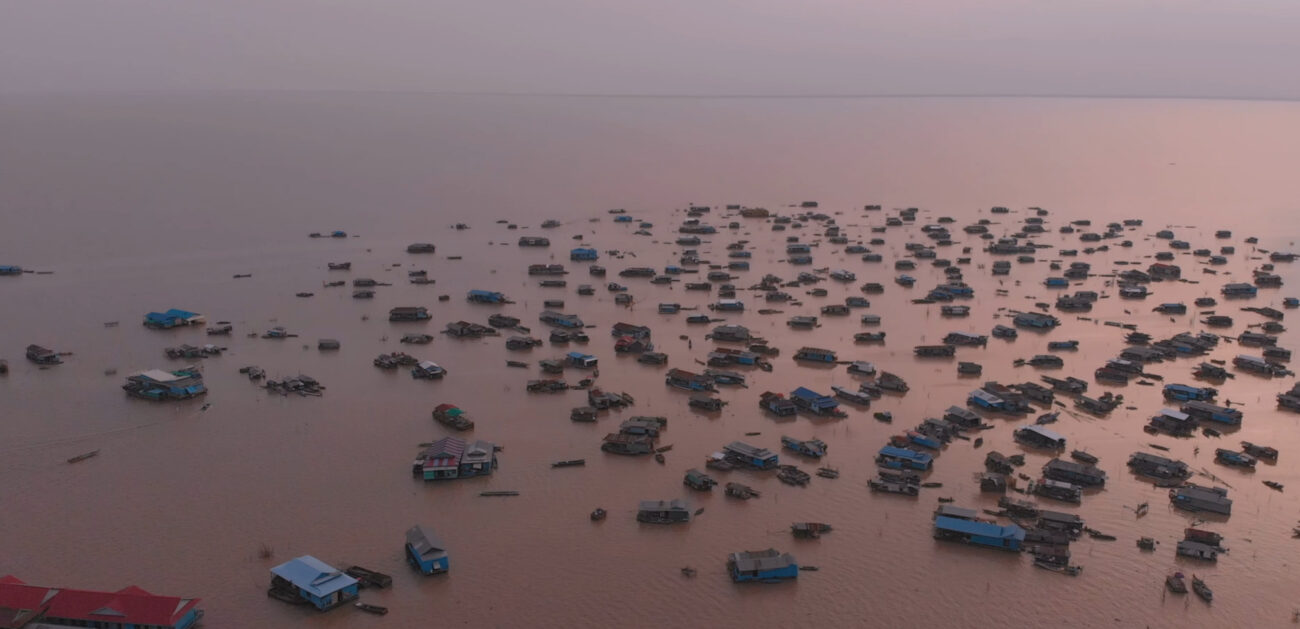
The vocabulary matters because it prevents sloppy storytelling. “Floating village” is a broad label that gets slapped onto different settlement types. Kampong Phluk is framed as a stilt-house village with an experience that shifts hard between wet and dry seasons, often paired with a flooded forest segment (sometimes sold as an add-on canoe). Kampong Khleang is framed as more remote, approached via longer drives and, on some tours, by private river craft on the Khleang River—often described as passing flooded forest zones before reaching the village. Same lake. Different logistics. Different energy.
A common misconception about visiting Tonle Sap is that these villages are always floating and look the same year-round. The factual truth is that wet and dry seasons can produce two visibly different experiences: higher water months support more boat-based access and “water-world” impressions, while the dry season shifts the emphasis to stilt infrastructure and lower-water realities—sometimes changing which routes and add-ons are even possible.
And there’s another truth that’s harder to romanticize: water stress changes everything. When local people describe low-water years, they do it without metaphor. It can be as direct as a fisherman’s line about the lake: there is no water, there is no fish. That sentence sits in your chest longer than any sunset photo.
We can’t catch anything. There is no water, there is no fish.
— Local fisherman, Tonle Sap
Data Overview: Comparing the Top Options
| Tour Style | Best For | Primary Focus |
|---|---|---|
| Kampong Khleang Full-Day: Private River Craft + Floating School Stop | Travelers who want the most structured, remote-feeling kampong khleang tour with a river approach and an explicit cultural stop. | Tonle Sap hydrology context, stilt architecture (up to ~10m), Khleang River approach, floating school framing. |
| Kampong Khleang Longer Day-Format: Capped Small Group | Travelers who want more time than a half-day but still prefer a small group cap. | Time-on-route balance: longer duration to access the village environment beyond the closest lake-edge options. |
| Kampong Khleang Half-Day: Short-Format Entry Point | Travelers with limited time who still want a kampong khleang floating village visit in a single block. | Efficient snapshot: a shorter duration centered on reaching the lake/village environment. |
| Kampong Phluk Half-Day: Market/Pagoda + Motorboat + Optional Canoe | Travelers who want transparent inclusions and a clear optional canoe add-on through flooded forest. | Stilt village contrast plus an add-on canoe segment (often priced as an extra). |
| Kampong Phluk Day-Format: Market Pass + Boat + Floating Restaurant (Sunset Option) | First-timers who want a polished “classic” floating-village sequence with a floating-restaurant stop. | Wet/dry season framing, village overview, and a resting/viewpoint stop on the lake. |
In-Depth Analysis: The Standout Experience
Kampong Khleang Full-Day: Private River Craft on the Khleang River + Floating School Stop
Ideal for: Travelers who want the most immersive, remote-feeling kampong khleang private tour structure with a river approach and a defined cultural stop. Skip this if: You dislike itineraries involving floating school visits or any framing around bringing/handing out supplies.
There’s a practical reason this format wins: it gives the story time to assemble. The longer transfer from Siem Reap is part of the point, not an inconvenience to apologize for. Distance separates Kampong Khleang from quick-hit lake touring, and it filters the crowd in a way that’s almost too honest. Some itineraries flag the drive at around 75 minutes, and that detail matters because comfort dictates perception. If you arrive irritated, you’ll read the place as a spectacle. If you arrive curious, you’ll start noticing the logic in the build.
On the water, the private river craft approach changes the pacing. Our boat slowed near the river’s edge as the landscape shifted into zones that, in higher-water months, read as flooded forest corridors. In that moment the reverse-flow phenomenon stops being a factoid and becomes a physical feeling: the idea that the lake expands, routes open, and a settlement can exist with confidence that water will return. Then the architecture takes over. In the dry season, those posts feel almost confrontational—homes on stilts described as tall as 10 meters, rising above ground that looks temporarily exiled from the lake. You can’t photograph your way into understanding it. You have to sit with it, let your eyes adjust, let the boat’s engine note settle into your spine.
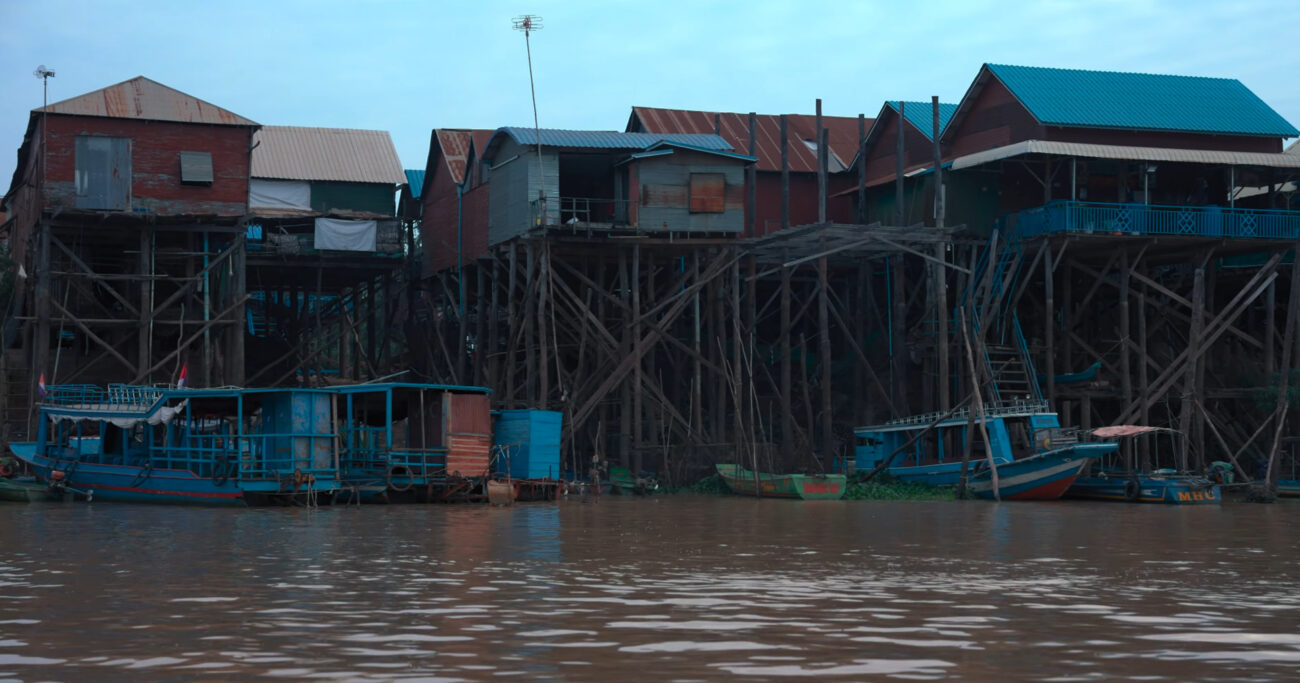
The floating school stop is where ethical travel stops being a slogan. Some tours explicitly include this visit, sometimes with language about bringing school supplies. Whether you engage or not, your presence shapes the room. I think the most responsible posture is restraint: observe without turning the village into a stage, and never treat children as a photo prompt. The tour describing “all fees included” helps—well, it can help—because it reduces awkward transactional moments that can sour interactions. Still, the tour flags the real boss: water levels. The lake is in charge, not the itinerary, and it doesn’t negotiate with your schedule.
The lake decides our day. Some seasons it brings the road to our door; other seasons we walk to the water.
— Local guide, Kampong Khleang
Comprehensive Reviews: Other High-Performing Itineraries
2. Kampong Khleang Longer Day-Format: Capped Small Group (6h30m)
Ideal for: Travelers who want a longer kampong khleang tour with a defined small-group cap. Skip this if: You’re sensitive to bumpy, dusty access roads and longer transfers.
This is the compromise format: longer than a half-day, not private, still designed to avoid the feeling of being processed. The stated maximum group size (11) is the whole point. On Tonle Sap, fewer people changes everything. The boat stops feeling like a shuttle and starts acting like a moving observation deck. Conversations soften. You hear the diesel hum instead of a chorus of phone notifications. Small difference. Massive effect.
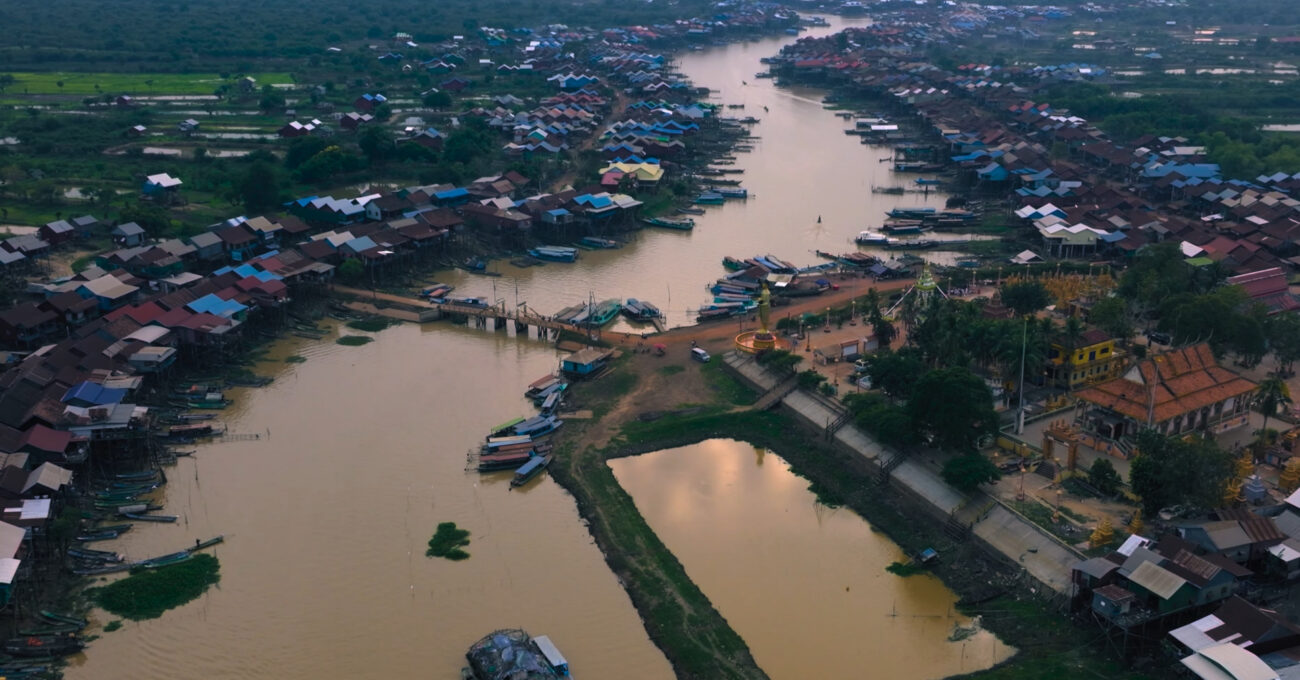
What surprised us most was how much the extra time reduced the rush factor. It didn’t remove the dependency on water levels—nothing does—but it gave the itinerary enough slack to absorb small delays without collapsing into stress. In a landscape governed by the monsoon flooding cycle, slack is luxury. The value of this tour isn’t a single stop. It’s the breathing room, the permission to watch without sprinting.
- Smaller cap (maximum of 11 travelers) supports a calmer, less crowded on-water experience.
- Longer duration increases odds of a fuller lake + village sequence rather than a compressed loop.
- Clear published starting price point (around $105) signals where this sits in the market hierarchy.
- Long duration + distance makes the experience more vulnerable to water-level variability in access and visuals.
- Not private, which limits control over time allocation and micro-stops.
3. Kampong Khleang Half-Day: Short-Format Entry Point (3h30m)
Ideal for: Travelers who want a kampong khleang floating village visit without committing a full day. Skip this if: You want an off-the-beaten-path feel with lots of time inside the village environment.
Half-day Khleang formats are built for efficiency, which is both their advantage and their limitation. The stated duration (3 hours 30 minutes) is the reality you need to accept before booking: road time and water time must fit into that box. If the lake is cooperative and the route runs smoothly, you get a clean snapshot. If anything slows, the experience can feel like a checklist. And checklists kill curiosity.
Still, I get why people choose it. You get a clear entry point into a more remote village narrative without rearranging your Siem Reap plan. For some travelers, it’s the only way Khleang fits at all. Just don’t expect the same psychological shift you get from a longer day. On Tonle Sap, time is part of the landscape, not a scheduling detail.
- Clear starting price point (around $60) for Kampong Khleang formats.
- Short duration works for travelers stacking multiple activities on the same day.
- Khleang-specific focus rather than a generic “lake tour” label.
- Compressed pace: less buffer for road time, boat timing, and water-level constraints.
- Currency display and pricing can vary by locale and listing context (watch what’s actually being charged in your checkout currency).
4. Kampong Phluk Day-Format: Market Pass + Boat + Floating Restaurant (Sunset Option)
Ideal for: First-time visitors who want a polished structure: market context, village viewing, then a floating-restaurant stop that doubles as a rest point. Skip this if: You want the flooded-forest canoe included rather than sold as an add-on.
Kampong Phluk is often framed as the stilt village that teaches you the lake’s seasonal logic. On this longer day-format itinerary, the sequence is intentional: a countryside drive from Siem Reap, a market pass in the Roluos area, then the village itself. The narrative emphasis is wet vs dry season contrast, and it’s one of the cleanest ways to stop tourists from expecting a single “floating” aesthetic year-round.
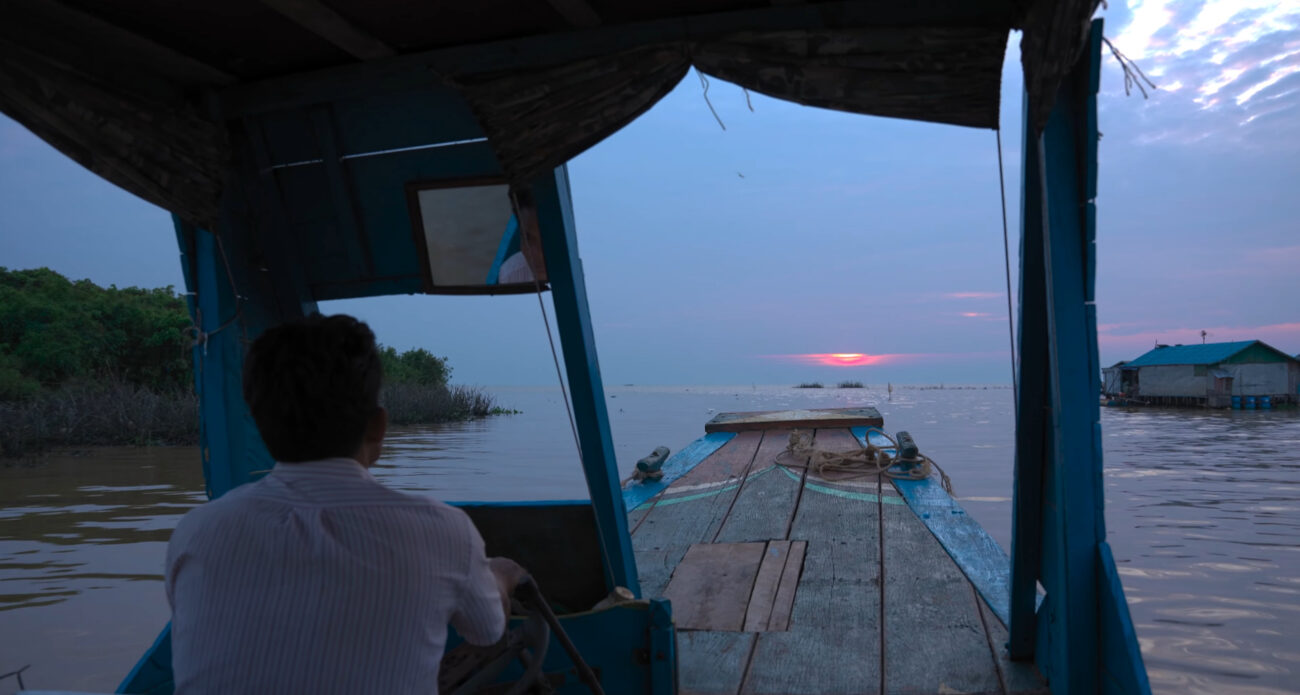
The floating restaurant stop isn’t just a tourist flourish. It functions as a pressure valve: a place to pause, hydrate, and let the scale of Tonle Sap sink in. If you’re visiting during higher-water months, this can be where the floating feel clicks. If you’re visiting in the dry season, it can be where stilt architecture hits hardest—because the lake edge may look like it pulled away from your expectations. A weirdly useful moment. You recalibrate.
- Built-in Roluos market context adds grounded, on-land texture before the lake.
- Clear wet/dry season framing improves expectation management.
- Floating-restaurant segment provides a structured rest + viewpoint stop.
- Optional canoe through flooded forest can be an extra fee rather than included.
- High demand can translate to availability constraints and peak-time crowding.
5. Kampong Phluk Half-Day: Pagoda/Market + Motorboat + Optional Canoe (Canoe Often Priced as an Extra)
Ideal for: Travelers who want transparent inclusions—motorboat and community fee included—with a clearly priced optional canoe add-on. Skip this if: You’re traveling with younger kids; one shared format explicitly states it isn’t suitable for children under 12.
This half-day format is the most “honest spreadsheet” itinerary of the bunch. It states what’s included (motorized boat and community fee) and what isn’t (the canoe/rowing boat, often priced around $5 per person). That clarity matters on Tonle Sap, where surprise add-ons can sour the experience and distort how you read the community you’re visiting. People get weird when they feel hustled. They start filming. Bad energy.
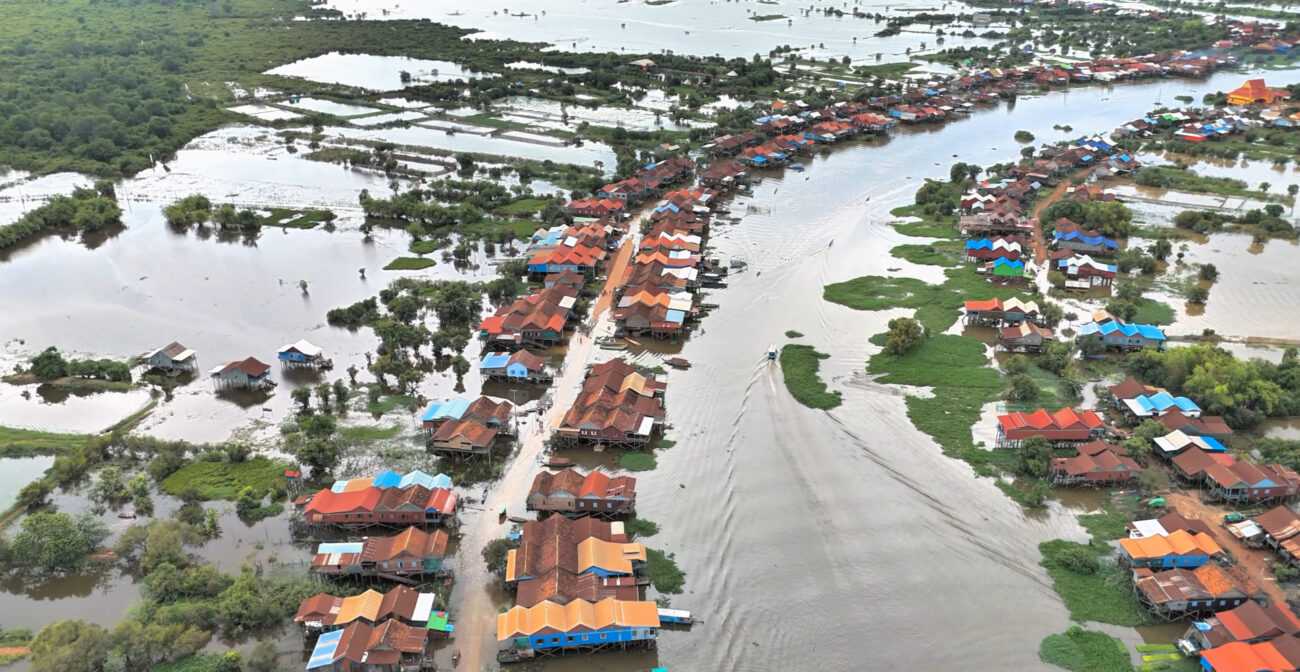
When we stepped off the road and into the village context, the sensory layer came fast: humid air when the rains are in, or the dry sting of dust when they’re not. The boat ride is the spine, and the optional canoe segment is where the flooded forest can become the visual payoff—if water levels cooperate. The caveat is suitability and accessibility. Uneven surfaces, ladders, slippery boards. You need functional legs and a little patience. Glamour is not guaranteed.
- Clear distinction between included fees and optional extras reduces friction.
- Pagoda or local market stop adds an on-land cultural anchor.
- Explicit framing of canoe ride through a flooded forest (season-dependent) sets expectations.
- Canoe/rowing segment can be an additional fee rather than bundled.
- Accessibility and age restrictions can exclude some travelers from shared options.
6. Kampong Phluk Half-Day Small Group: Capped Format (Max 15)
Ideal for: Travelers who want a capped group size and a classic Phluk boat-based itinerary that keeps the chaos down. Skip this if: You strongly prefer private touring with full control over stops and timing.
The difference here is simple: a cap of 15. On water, that number is felt in how quickly you board, how easily you hear the guide, how much the experience belongs to the place rather than to the crowd. The itinerary framing leans into seasonality—an “ever-changing landscape” shaped by wet and dry cycles—and good. That’s accurate. I’m tired of tours pretending the lake is a static backdrop.
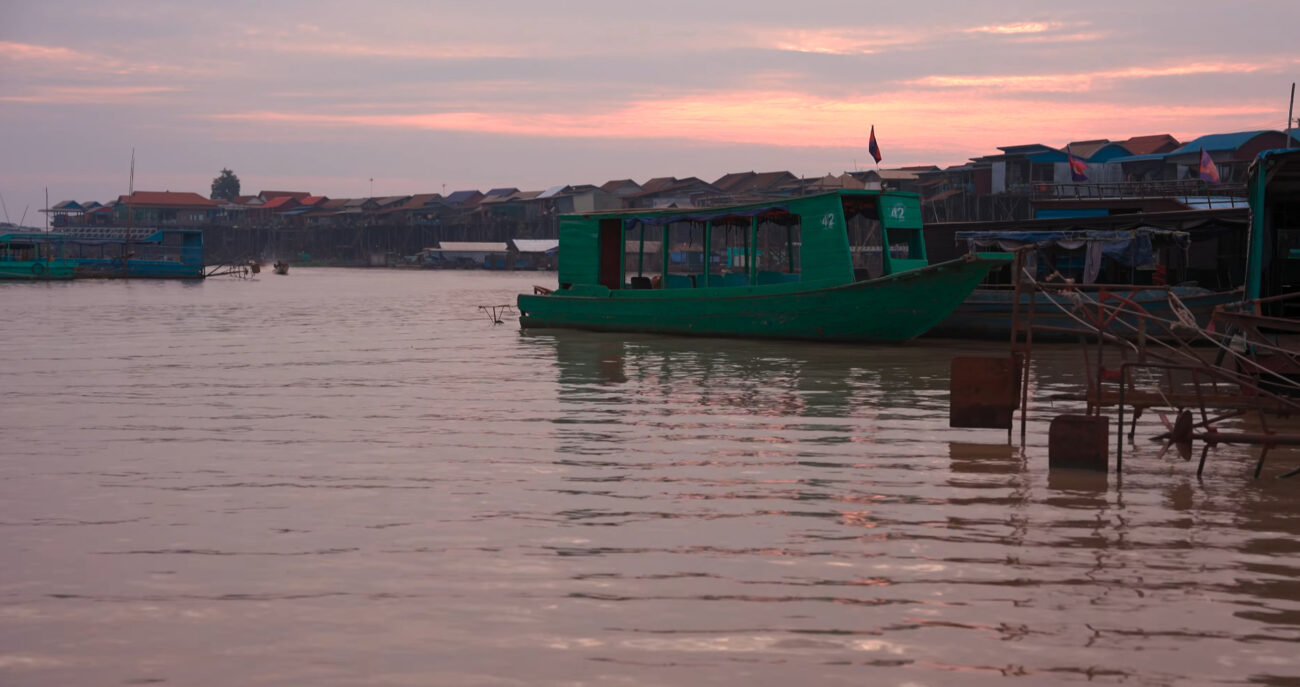
If you’re using Kampong Phluk as your first study of the lake, this format works as a primer. It won’t feel as remote as a kampong khleang tour, but it can feel more controlled than open-ended mass-market experiences. The essential truth remains: Tonle Sap is the boss. The day will reflect the lake’s mood. Sometimes that mood is generous. Sometimes it’s blunt.
- Hard cap on group size (≤15) can reduce crowd pressure and noise on the boat.
- Strong seasonality framing improves expectation management.
- Nature + village narrative (mangroves + stilt houses) supports a more contextual experience.
- Not a private tour; timing and pacing remain shared.
- Standard access constraints apply (mobility and surface unevenness are common realities in this environment).
Expert Field Notes
Tonle Sap tours look simple on paper—transfer, boat, village, return—but the on-the-ground reality is shaped by add-ons, cash moments, and etiquette. If you want your kampong khleang floating village experience to feel ethical and calm, treat logistics as part of cultural respect, not as an afterthought.
- Bring small cash: optional canoe/rowing segments through flooded forest can be priced separately (one common figure presented is $5 per person), and some tours explicitly advise bringing cash.
- Plan for water-level variability: itineraries may explicitly state dependence on lake water levels; your route and visuals can shift with the season.
- Handle school visits with restraint: if an itinerary includes a floating school stop, observe without turning it into a photo scavenger hunt.
- On-the-water basics beat fancy gear: sun protection and hydration matter more than lenses, and you’ll feel that fast.
Frequently Asked Questions
Kampong Phluk or Kampong Khleang—which one is farther from Siem Reap?
Kampong Phluk is commonly framed around roughly a 45-minute drive from Siem Reap (around 30 km / roughly 44 minutes by road), while Kampong Khleang is referenced around 55 km from Siem Reap and can involve transfers around 75 minutes on some itineraries.
Will I definitely see “floating houses” on a kampong khleang tour?
Not as a guaranteed, year-round visual. Tours frame wet versus dry seasons as two different experiences: higher water months can deliver stronger “floating / water-world” impressions; the dry season shifts the emphasis to stilt infrastructure and lower-water realities.
Are boat and canoe segments always included in the price?
No. Some itineraries include motorboat and community fees but list canoe/rowing segments separately—one commonly stated figure for a flooded-forest canoe add-on is $5 per person. Some tours also explicitly advise bringing cash for such add-ons.
Are there child-related restrictions on shared tour formats?
Yes. On at least one shared format for Kampong Phluk, the shared option is stated as not suitable for infants or children under 12.
How sensitive are these tours to water levels and seasonal variability?
Some operators explicitly warn that certain itineraries depend on lake water levels, and local reporting from Kampong Khleang documents periods where low-water conditions affected boating and fishing.
What’s Next?
If your goal is deeper Southeast Asia travel—not just “seeing sights,” but learning how landscapes shape daily life—use Tonle Sap as a reference point. Follow the logic outward: water systems that reverse, communities that build upward on stilts, and journeys where the most important part isn’t the photo. It’s the understanding that settles in once the engine cuts and you’re left with mud smell, heat, and a lake that refuses to behave like a tourist attraction.